
Blooming Girls STEM
timeline
2024 – Present
role
Co-Founder
Curriculum Director
Program & Outreach Lead
skills
Click to visit Website
Click to visit Instagram
Problem Statement
As a girl who grew up pursuing competitive mathematics and science, I saw how easily interest in STEM could be shaped by more than academic ability. Girls were often underrepresented in advanced classes and competitions, and many encountered stereotypes, limited access to role models, or teaching that made STEM feel rigid and disconnected from everyday life.
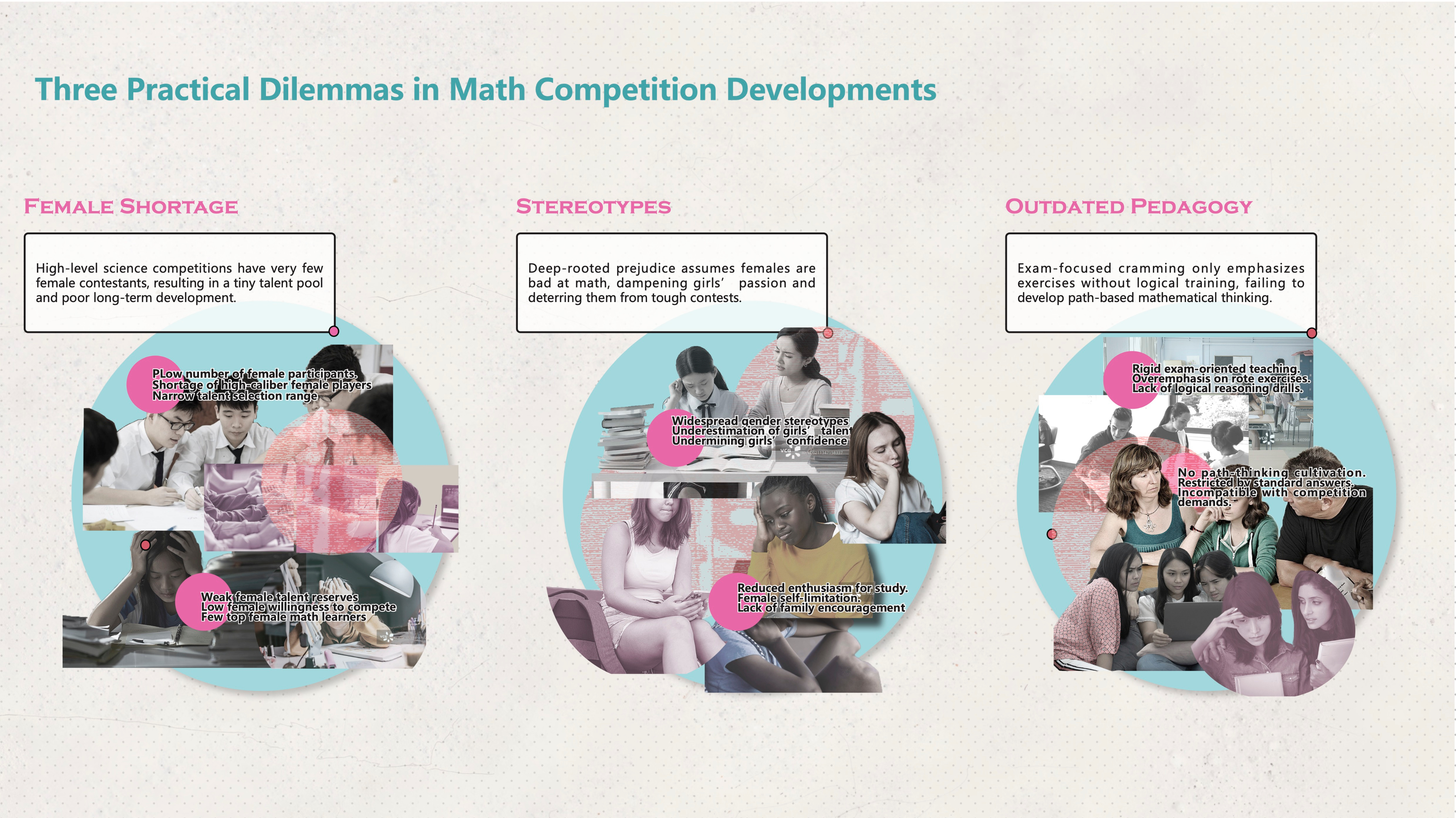
My initial visual analysis focused on three related problems in math competition development: the shortage of female participants, persistent gender stereotypes, and exam-centered pedagogy. These concerns led me to look beyond competition mathematics and ask a broader question: how could younger girls encounter STEM before uncertainty or social expectations began to narrow what they imagined for themselves?
I co-founded Blooming Girls STEM to address that question. The organization creates collaborative, hands-on STEM experiences for girls in grades 3–8, especially students who may have had limited access to enrichment opportunities. Our goal is not to tell girls that they should like STEM, but to give them enough room to experiment, build, ask questions, and discover which parts of it genuinely interest them.
Research & Program Direction
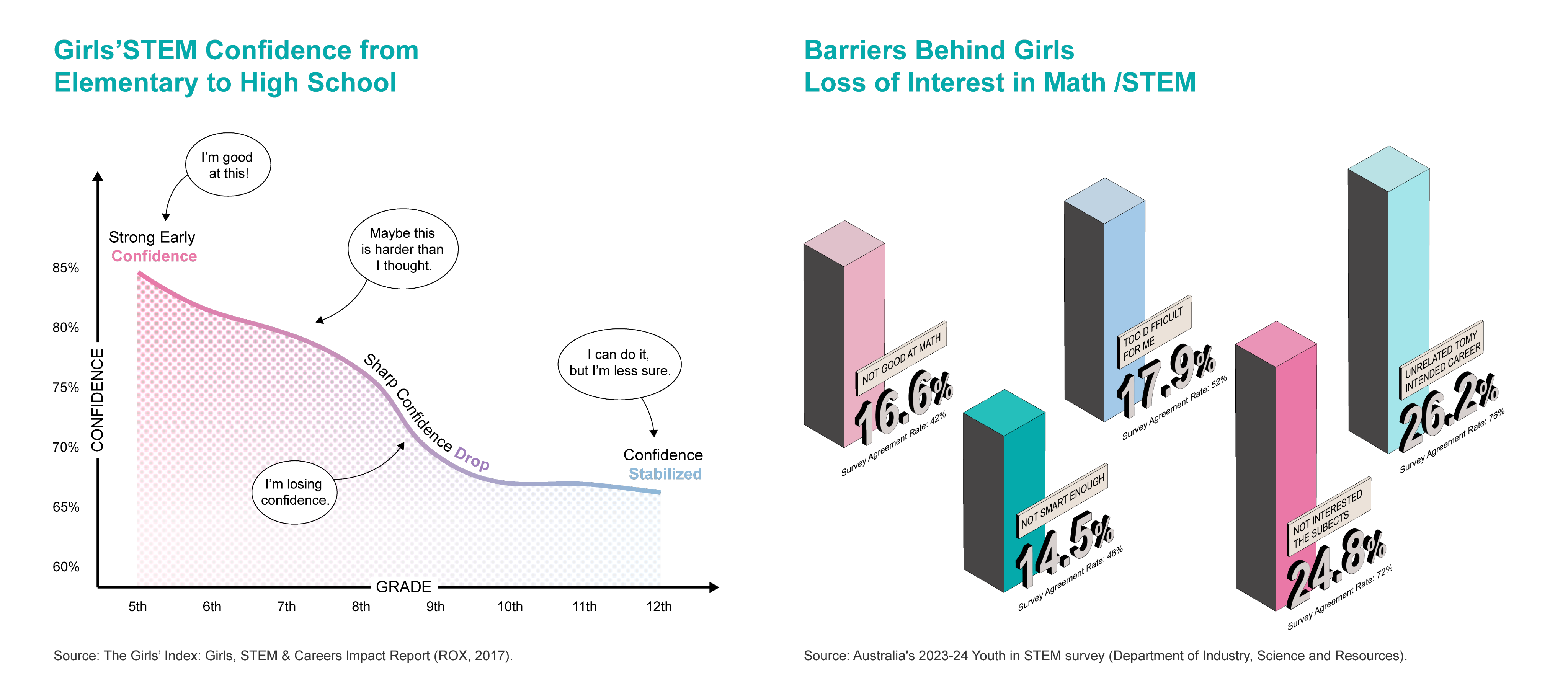
The confidence graph in my research shows girls’ reported STEM confidence declining from approximately 84% in fifth grade to 66% by twelfth grade, with much of the drop beginning before high school. A second visualization identifies several barriers behind disengagement, including perceived difficulty, low self-confidence, limited interest, and a weak connection between mathematics and students’ intended careers. Together, these findings suggested that intervention should begin early and should combine confidence-building with visible, practical applications.
I carried one useful feature from my earlier math curriculum into Blooming Girls STEM: visual, low-entry activities that invite students to test ideas before they have mastered formal terminology. The existing logic-puzzle collection remains a model for this approach, while the broader program now applies the same principle to chemistry, biology, computer science, physics, engineering, and environmental science. Instead of beginning with a lecture, each workshop begins with something students can make, observe, redesign, or explain.
This research informed four recurring workshop series:
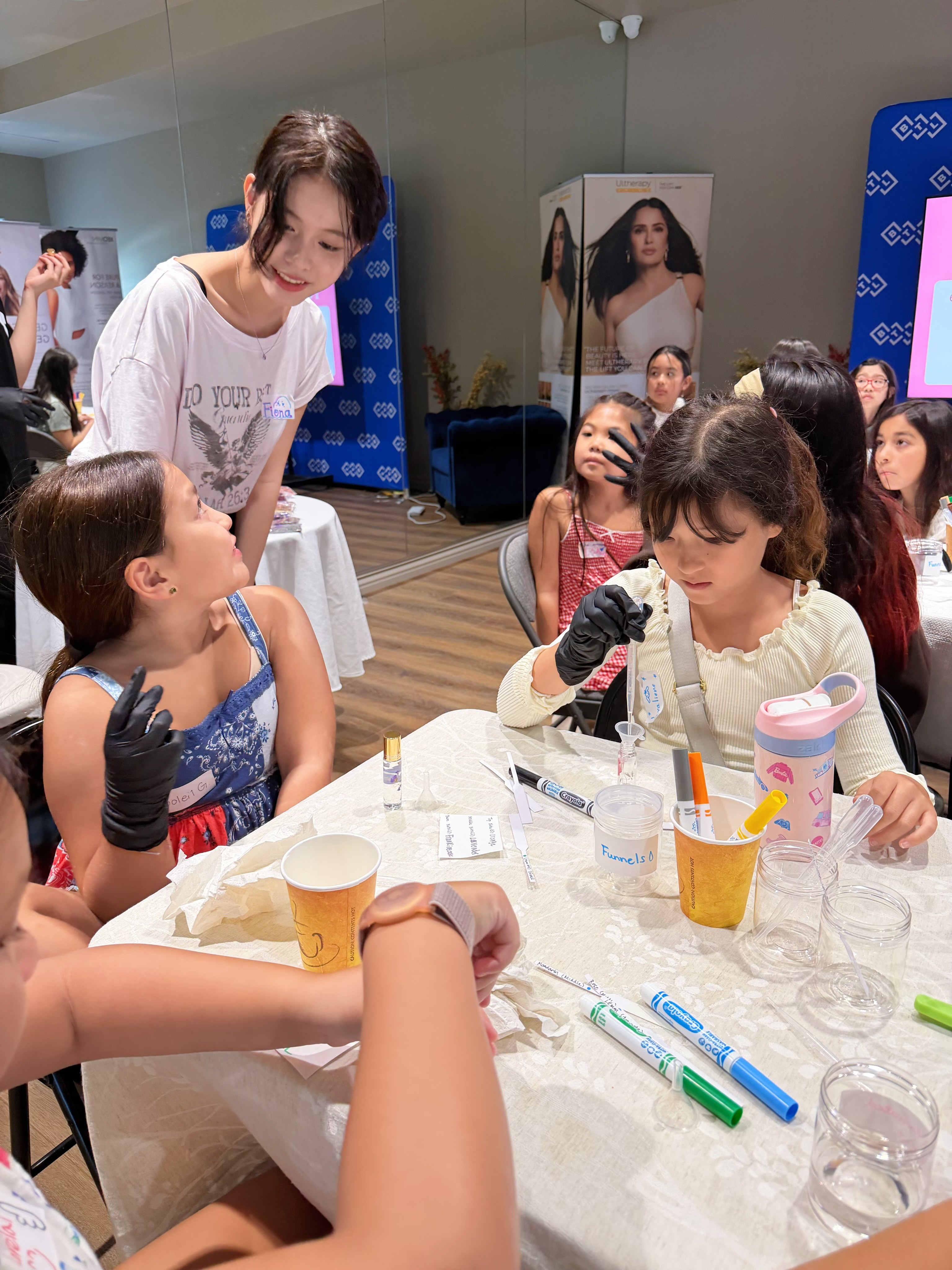
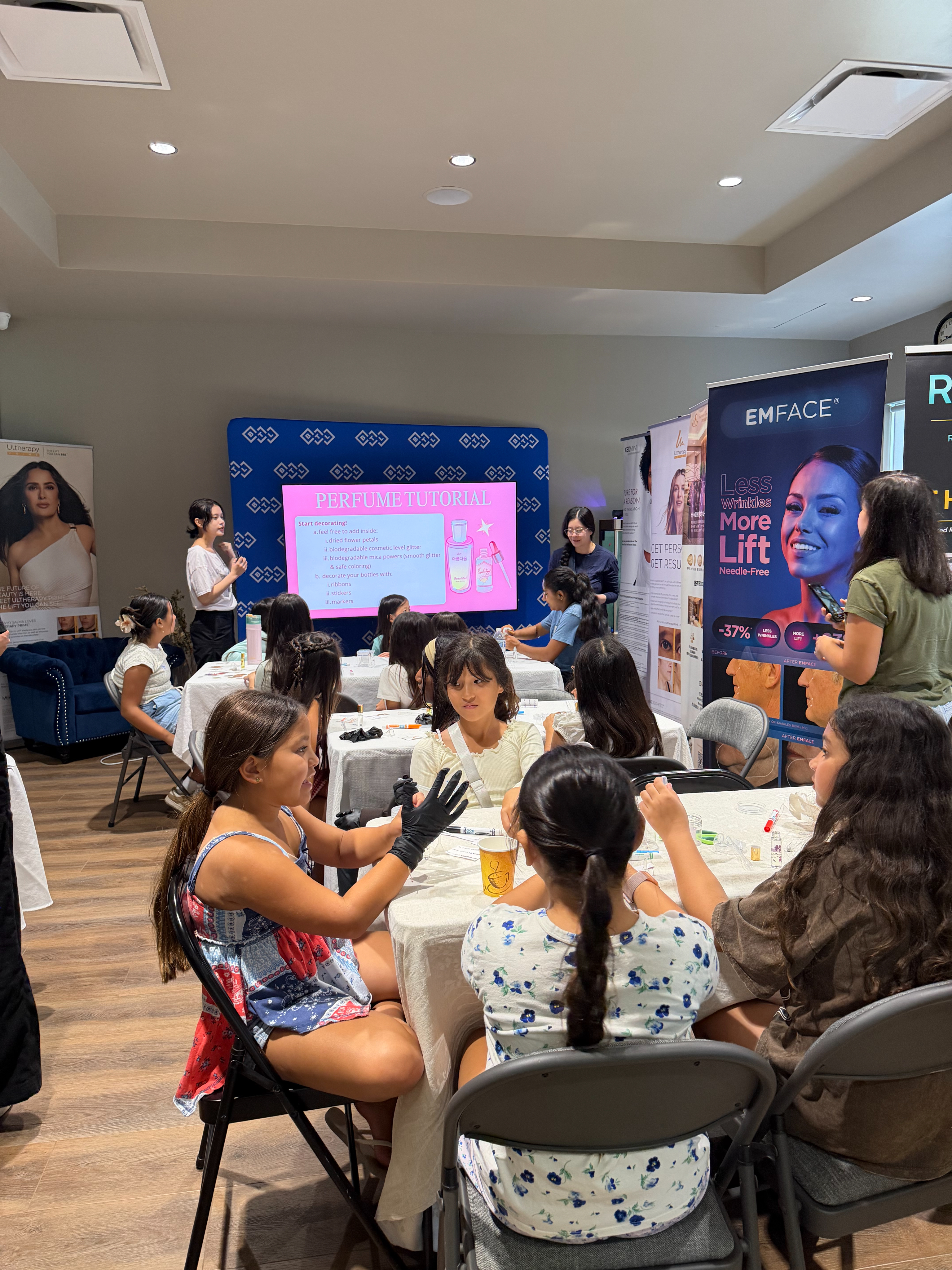
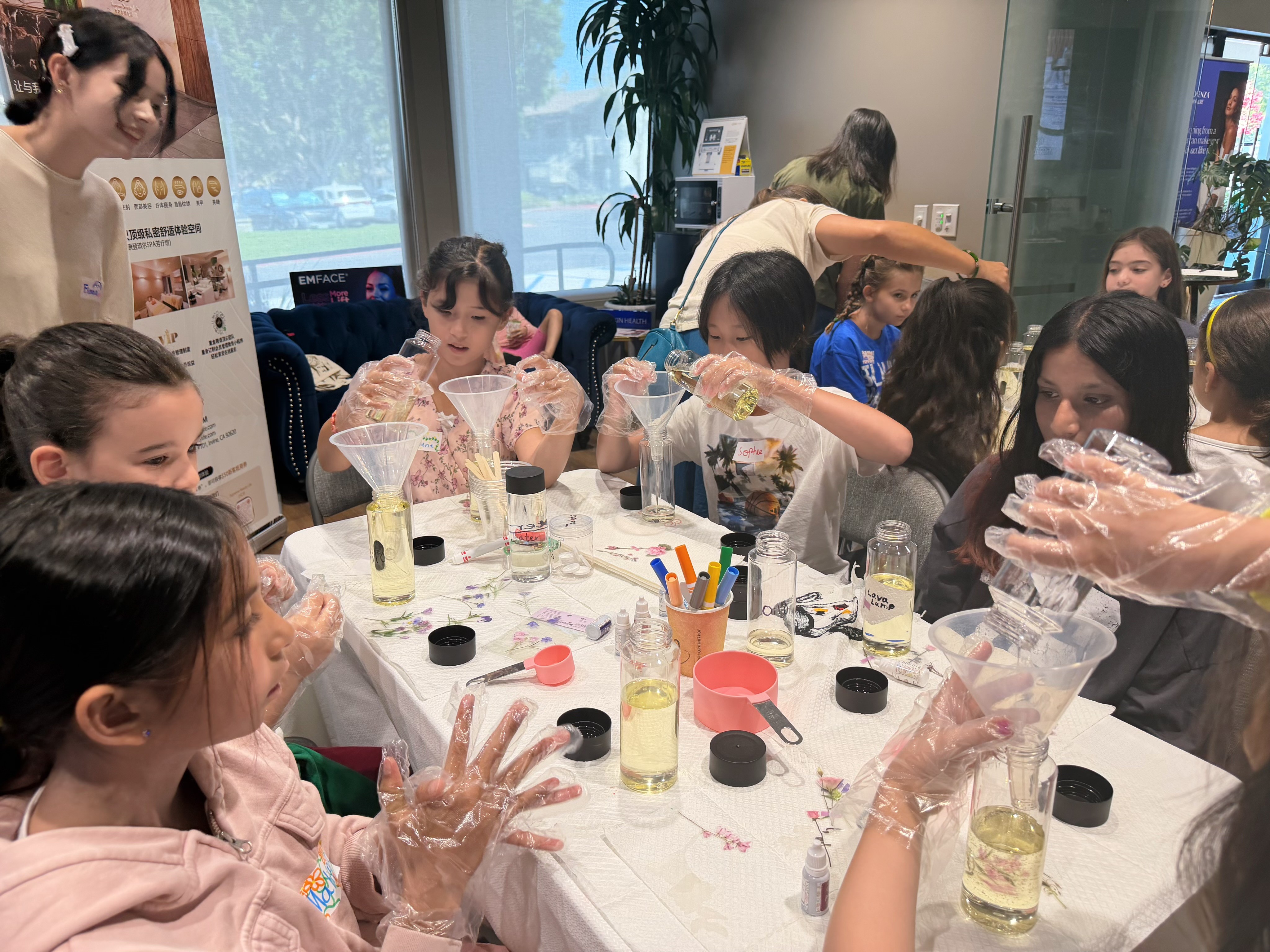
Chemistry & Cosmetics, which uses familiar products to introduce mixtures, polymers, pigments, pH, and chemical reactions;
Bloom Tech Studio, where students design apps, games, and digital tools around real-life problems while learning about responsible technology and AI use;
Engineers in Action, which turns physics and iterative design into projects such as balloon rockets, egg-drop systems, and prosthetic-hand models;
Earth & Ecology, which explores life science, natural systems, and sustainability through field-based and hands-on activities.

Action
Building the Organization
I used funding from my Jane Street AMC scholarship to help launch the program and purchase materials. As co-founder, I have managed the budget, designed and maintained the organization’s website, structured its public information, promoted programs through social media, communicated with parents, and coordinated with venues and community partners. Explaining each workshop to families has been an important part of the work: parents should understand not only what their children are making, but also the scientific ideas and learning goals behind each activity.
Click to visit our Website
Curriculum Design
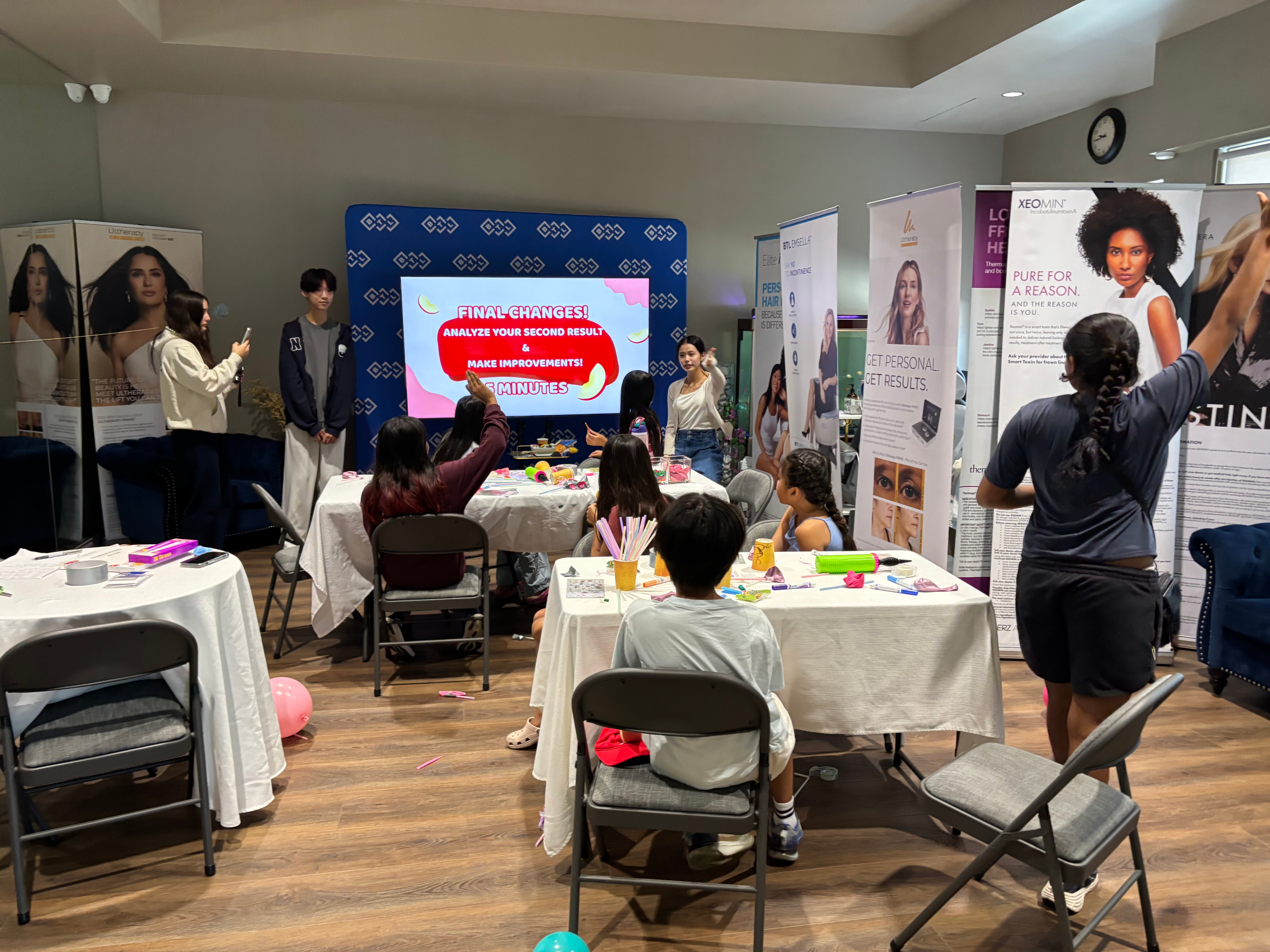
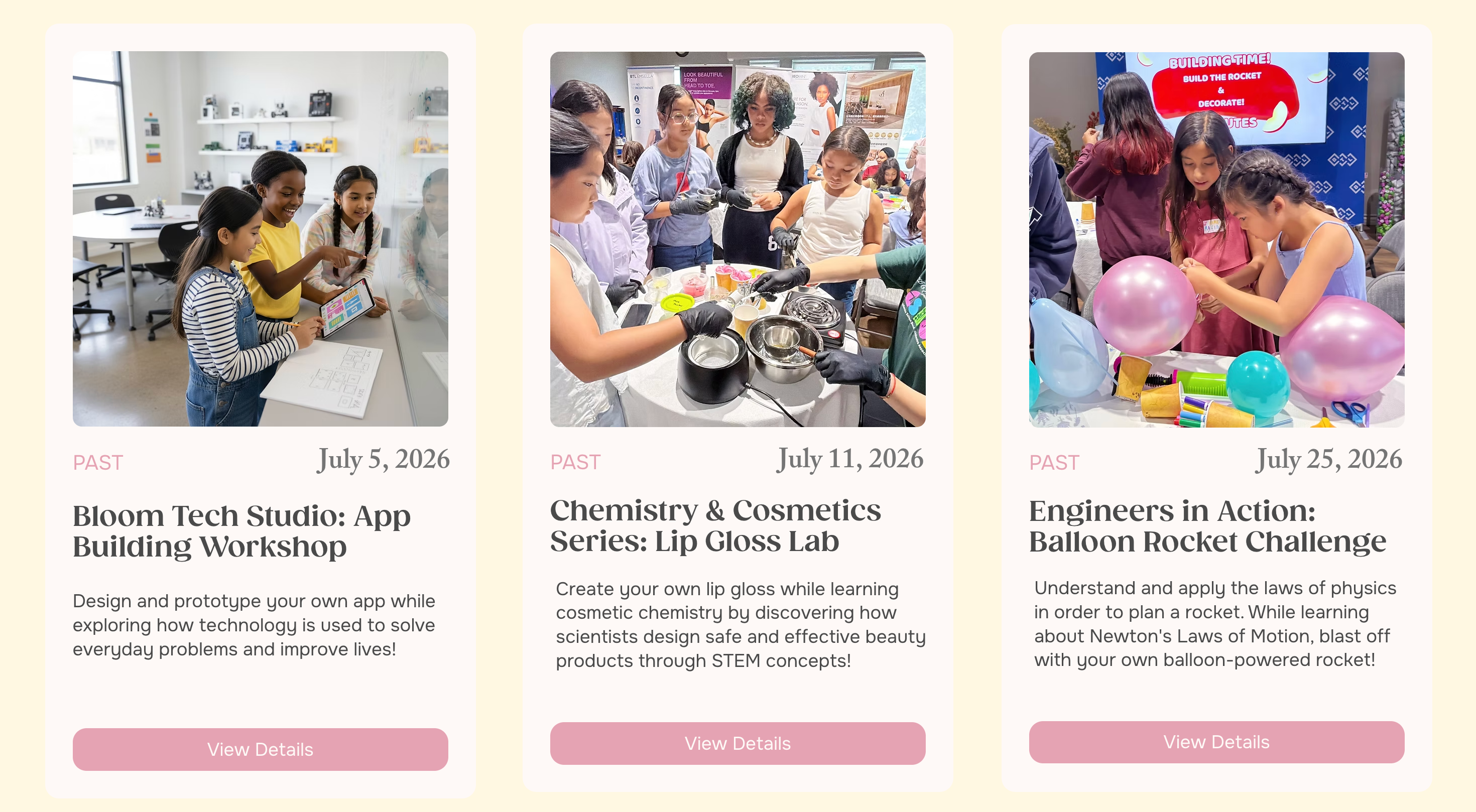
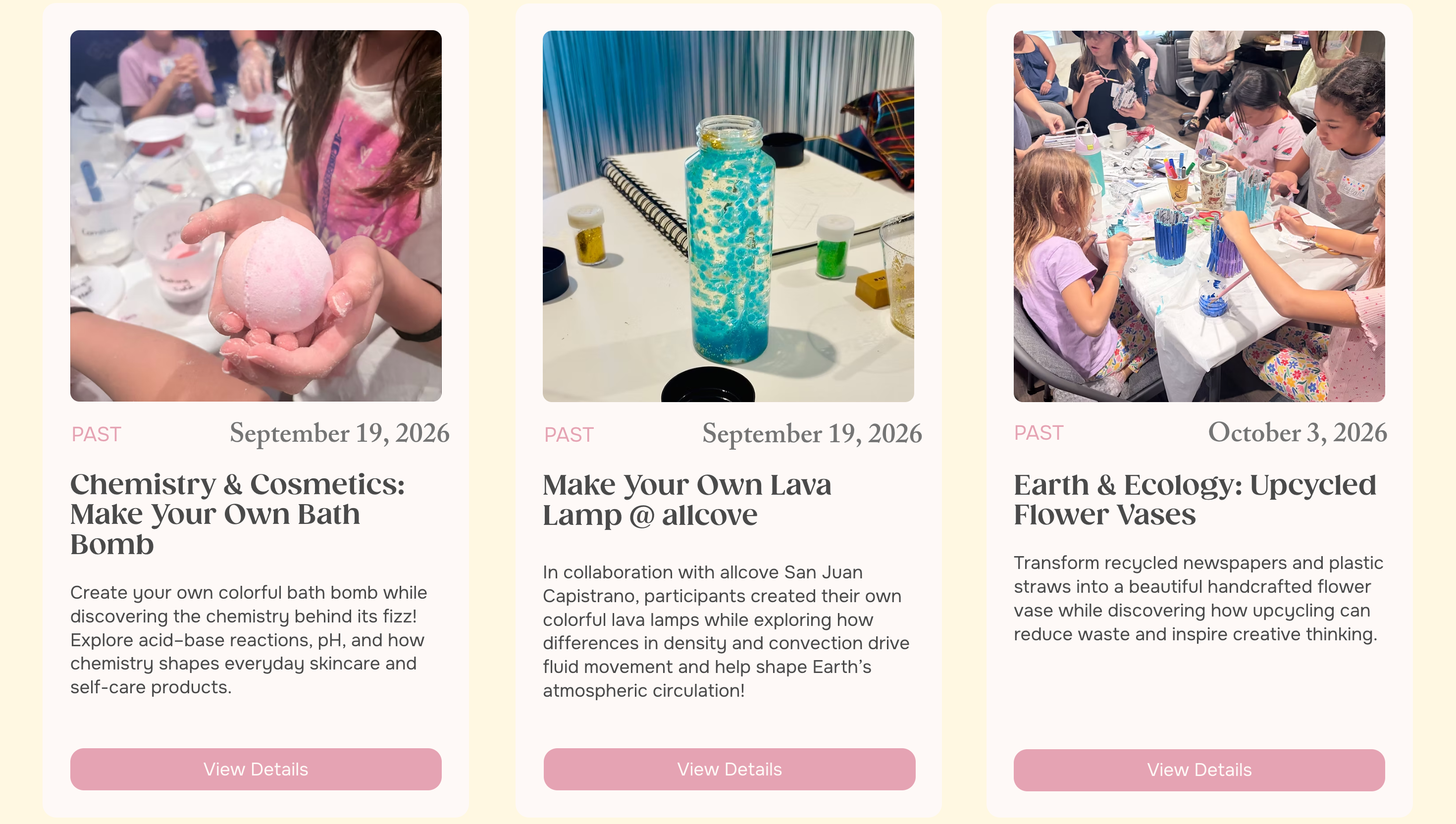
I design curricula by working backward from a clear scientific question and then building an activity that makes the concept observable. In the **Chemistry & Cosmetics: Lip Gloss Lab**, for example, students examine how oils, waxes, and pigments combine in a usable product. In the **Engineers in Action: Balloon Rocket Challenge**, students apply Newton’s laws while testing how design decisions affect motion. In **Bloom Tech Studio: Build Your Own App**, they prototype technology around a problem they care about. Other workshops use lava lamps to explore density and convection, bath bombs to introduce acid–base reactions, and upcycled flower vases to connect design with environmental responsibility.
These activities are playful, but they are not science-themed crafts. Each lesson connects the project to an age-appropriate concept, gives students space to make predictions and revise their work, and ends with discussion or reflection. Across the four series, I aim to make STEM rigorous enough to be meaningful and open-ended enough for students to develop their own questions.
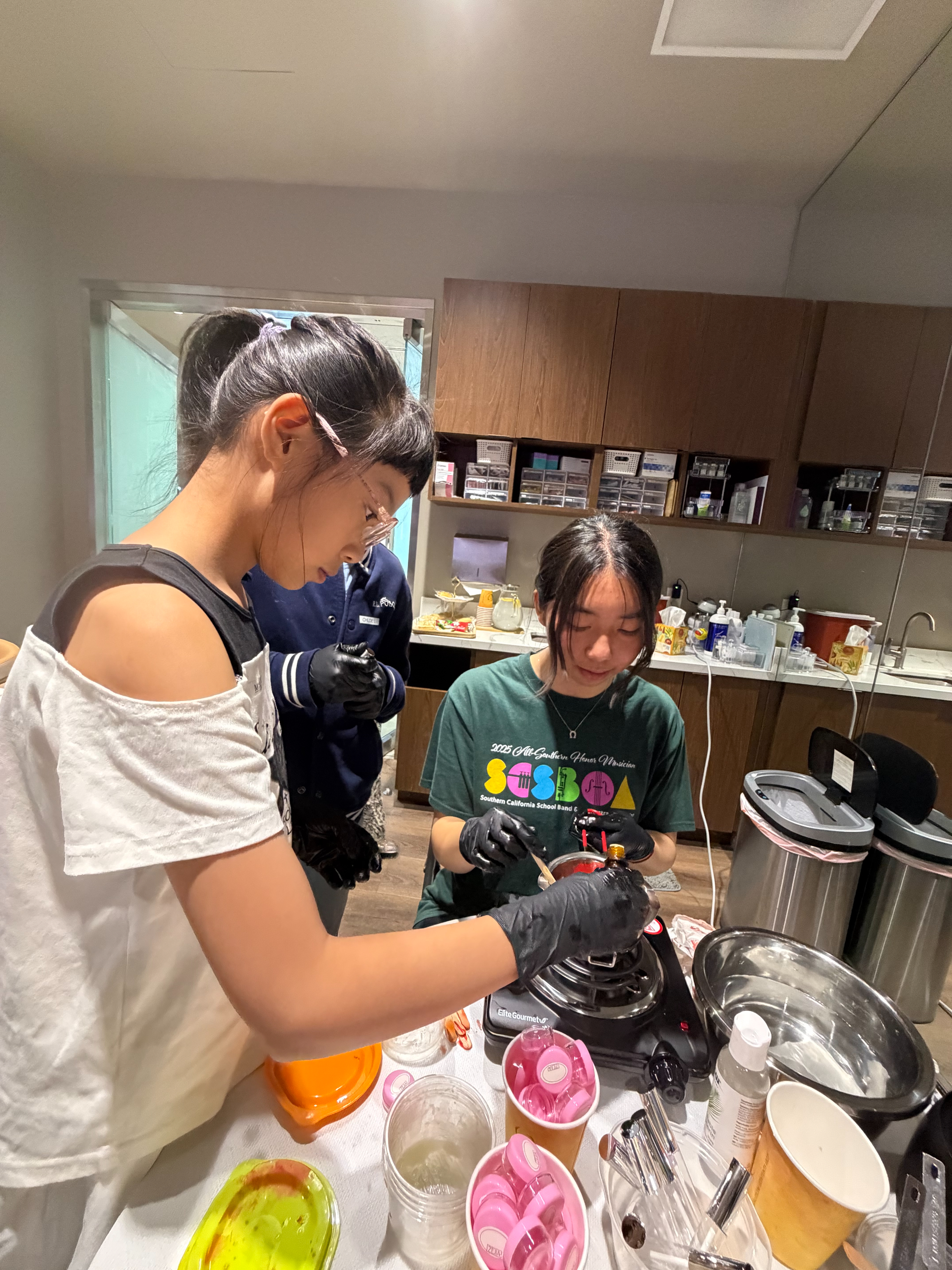
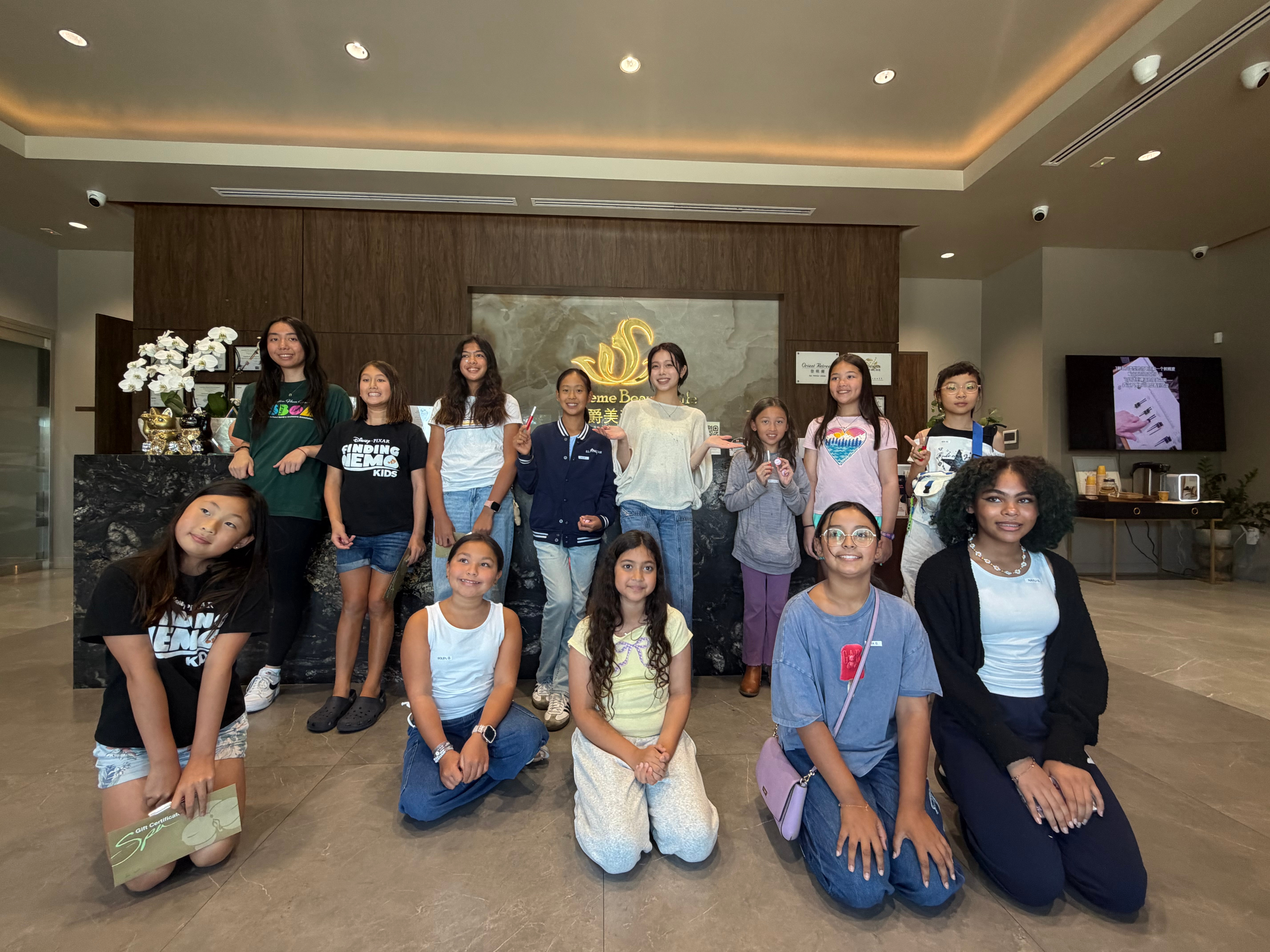
Chemistry & Cosmetics: Lip Products Lab— Revisited!
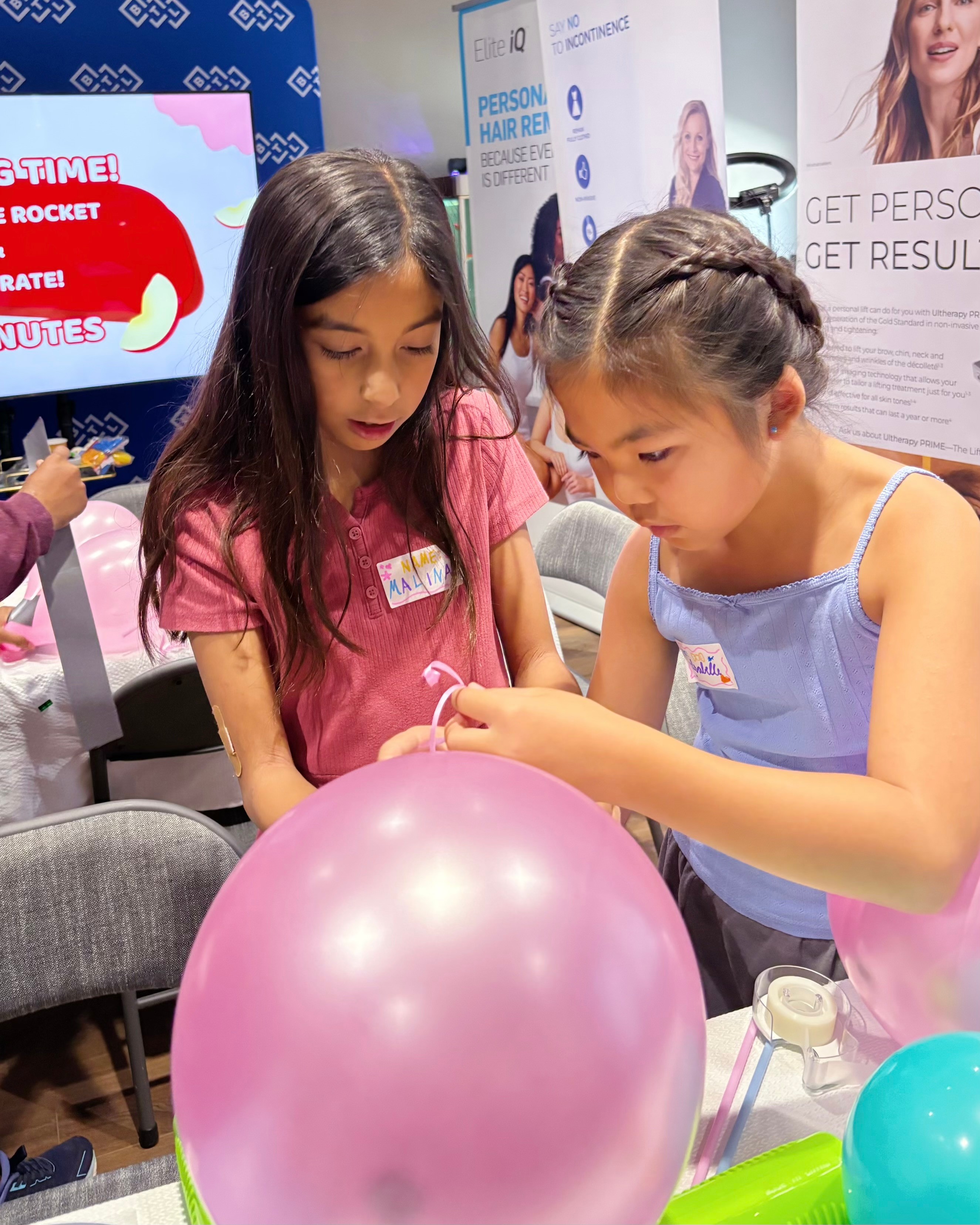
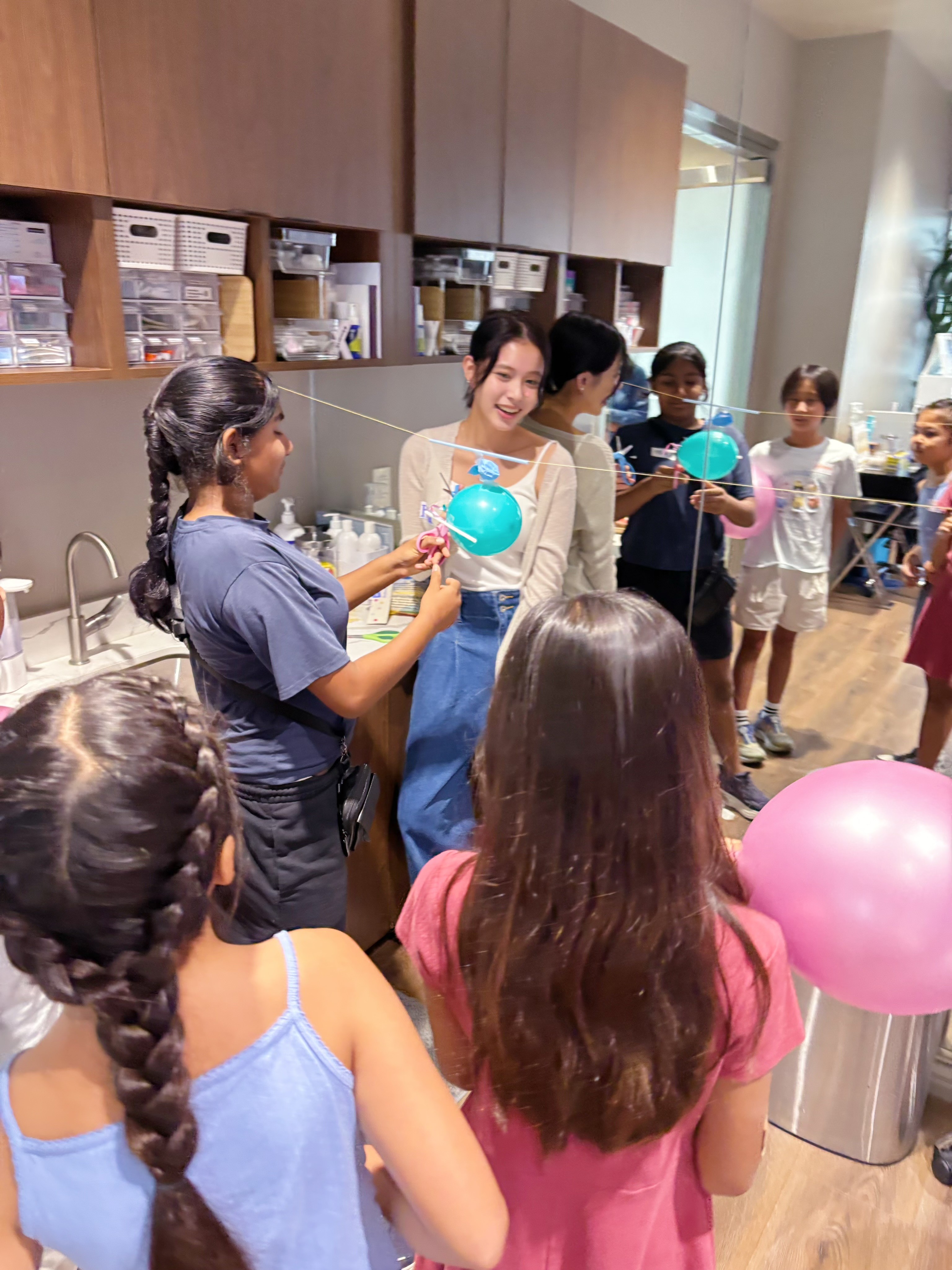
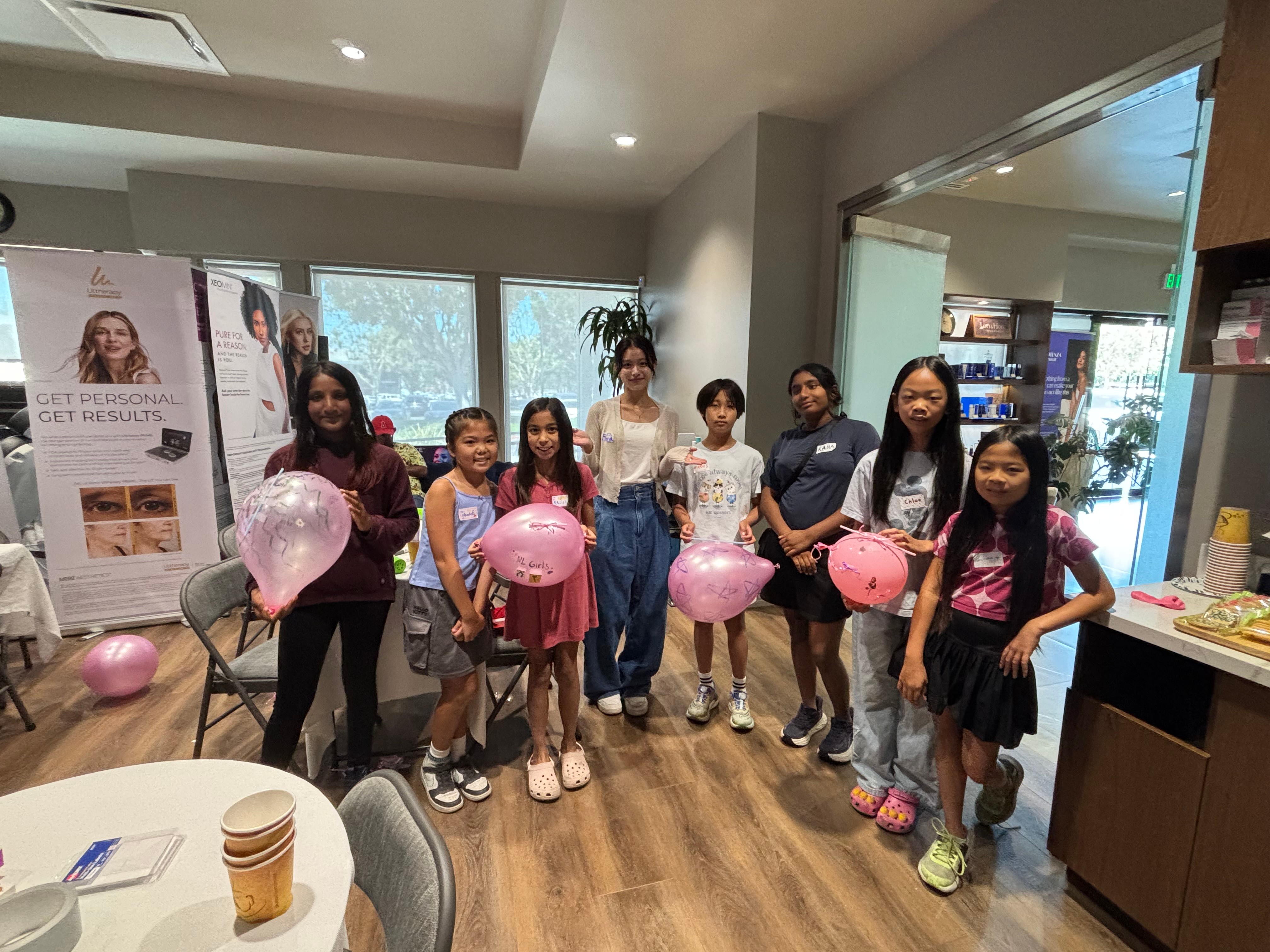
Engineers in Action: Balloon Rocket Challenge
Access, Community, and Partnerships
Blooming Girls STEM has organized more than 15 in-person and online workshops, field trips, and career-focused programs, with weekly sessions during active program seasons. Our programming reaches girls in the United States and Asia, while our local partnerships help us serve communities in Orange County. We have worked with organizations and venues including allcove, Crittenton, KidWorks, Supreme Beauty Life, and Social Justice Watcher. These collaborations help us bring workshops to students who may face financial or social barriers to STEM enrichment, including refugee youth and children in foster care.
I approach outreach as more than advertising. It involves listening to partner organizations, adapting lessons to different settings, preparing materials so that students can participate without prior experience, and building trust with parents and community leaders. The website currently reports 100+ girls reached each year, 15+ annual workshops, 5+ organizational partnerships, and a team of 20+ board members and volunteers across locations.
Some past events
Evaluation & Iteration
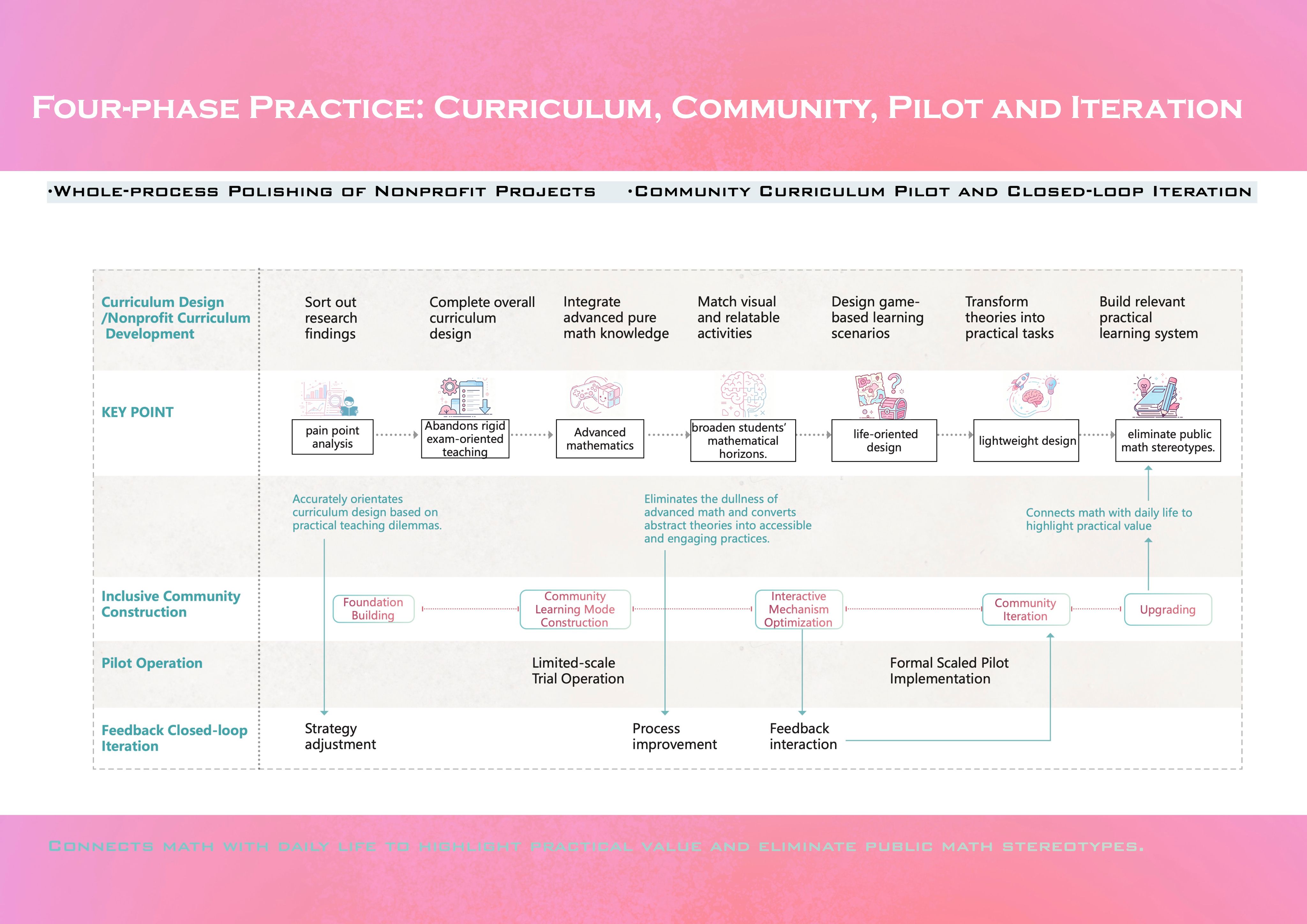
The four-phase analysis diagram now serves as an operating framework for the project: curriculum development, inclusive community building, pilot delivery, and feedback-driven revision. For each workshop, I consider whether the activity is scientifically accurate, visually understandable, relevant to students’ lives, and realistic for our team and partner venue to deliver.
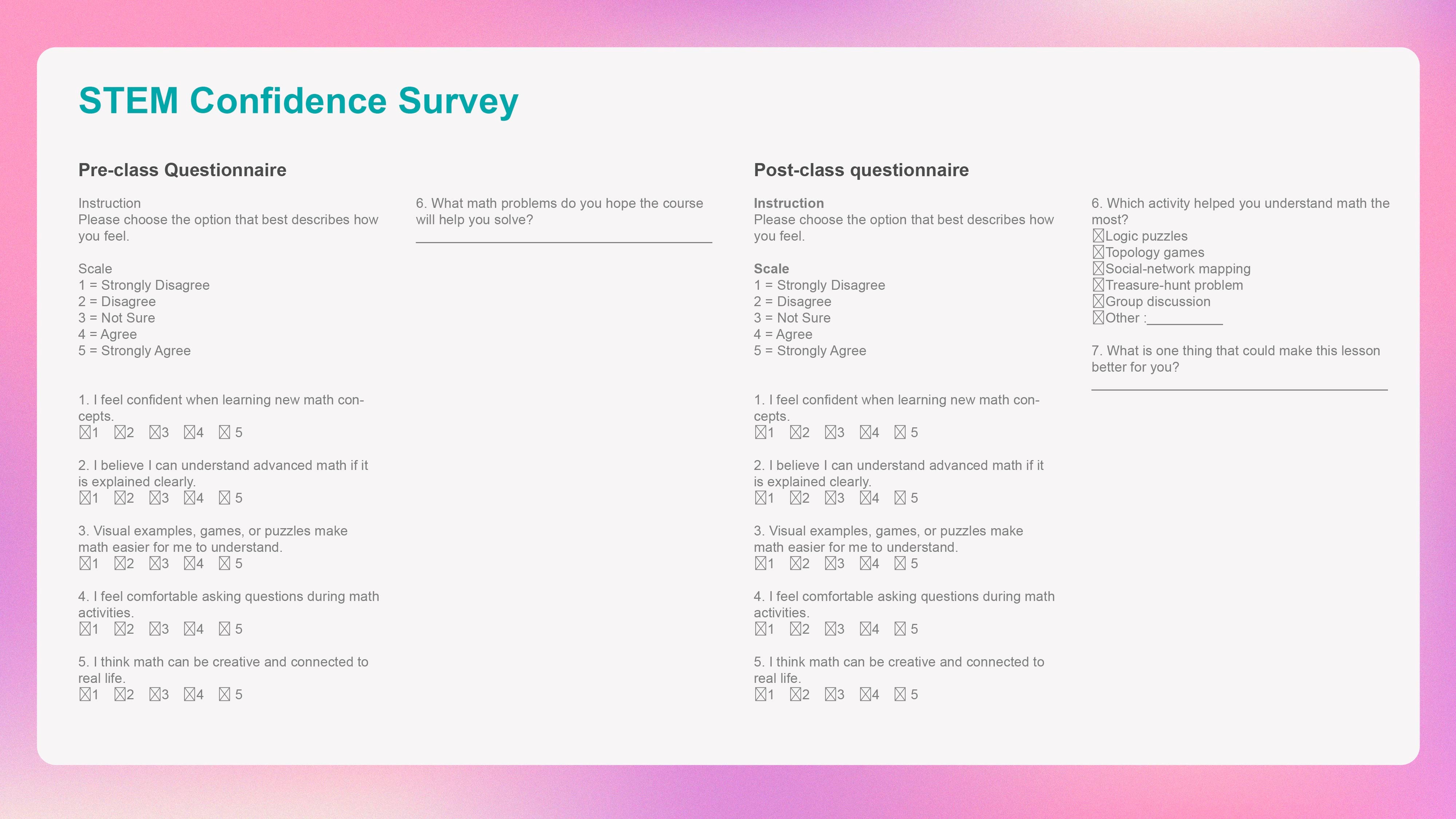
I also developed a matched pre- and post-workshop STEM confidence survey. It asks students about confidence with new concepts, comfort asking questions, belief that advanced material can be understood, and whether they see STEM as creative and connected to real life. The post-workshop section identifies which activity was most helpful and invites suggestions for improvement. I use this feedback alongside participation, questions, completion of activities, and students’ explanations of what they learned. Because the program is still growing, I treat these measures as tools for refinement rather than as proof of long-term impact.
Future Vision
Blooming Girls STEM began with a practical goal: make high-quality STEM exploration more accessible to younger girls. My next priority is to strengthen the program without losing the personal, hands-on environment that makes students comfortable experimenting. This includes refining the four workshop series, building a consistent volunteer-training system, expanding partnerships with organizations that serve underrepresented youth, and developing a recurring guest-speaker program that connects participants with women working across STEM fields.
Founding this organization has also changed how I understand STEM education. Strong instruction matters, but access, language, representation, and community determine who feels invited to participate. Blooming Girls STEM brings those elements together so that girls can encounter science and technology not as distant careers reserved for someone else, but as fields they are already capable of questioning, shaping, and enjoying.

home
problem statement
Research & Direction
Action
future vision

back to top
Blooming Girls STEM
timeline
2024 – Present
role
Co-Founder
Curriculum Director
Program & Outreach Lead
skills
Click to visit Website
Click to visit Instagram
Problem Statement
As a girl who grew up pursuing competitive mathematics and science, I saw how easily interest in STEM could be shaped by more than academic ability. Girls were often underrepresented in advanced classes and competitions, and many encountered stereotypes, limited access to role models, or teaching that made STEM feel rigid and disconnected from everyday life.
My initial visual analysis focused on three related problems in math competition development: the shortage of female participants, persistent gender stereotypes, and exam-centered pedagogy. These concerns led me to look beyond competition mathematics and ask a broader question: how could younger girls encounter STEM before uncertainty or social expectations began to narrow what they imagined for themselves?
I co-founded Blooming Girls STEM to address that question. The organization creates collaborative, hands-on STEM experiences for girls in grades 3–8, especially students who may have had limited access to enrichment opportunities. Our goal is not to tell girls that they should like STEM, but to give them enough room to experiment, build, ask questions, and discover which parts of it genuinely interest them.
Research & Program Direction
The confidence graph in my research shows girls’ reported STEM confidence declining from approximately 84% in fifth grade to 66% by twelfth grade, with much of the drop beginning before high school. A second visualization identifies several barriers behind disengagement, including perceived difficulty, low self-confidence, limited interest, and a weak connection between mathematics and students’ intended careers. Together, these findings suggested that intervention should begin early and should combine confidence-building with visible, practical applications.
I carried one useful feature from my earlier math curriculum into Blooming Girls STEM: visual, low-entry activities that invite students to test ideas before they have mastered formal terminology. The existing logic-puzzle collection remains a model for this approach, while the broader program now applies the same principle to chemistry, biology, computer science, physics, engineering, and environmental science. Instead of beginning with a lecture, each workshop begins with something students can make, observe, redesign, or explain.
This research informed four recurring workshop series:
Chemistry & Cosmetics, which uses familiar products to introduce mixtures, polymers, pigments, pH, and chemical reactions;
Bloom Tech Studio, where students design apps, games, and digital tools around real-life problems while learning about responsible technology and AI use;
Engineers in Action, which turns physics and iterative design into projects such as balloon rockets, egg-drop systems, and prosthetic-hand models;
Earth & Ecology, which explores life science, natural systems, and sustainability through field-based and hands-on activities.
Action
Building the Organization
I used funding from my Jane Street AMC scholarship to help launch the program and purchase materials. As co-founder, I have managed the budget, designed and maintained the organization’s website, structured its public information, promoted programs through social media, communicated with parents, and coordinated with venues and community partners. Explaining each workshop to families has been an important part of the work: parents should understand not only what their children are making, but also the scientific ideas and learning goals behind each activity.
Click to visit our Website
Curriculum Design
I design curricula by working backward from a clear scientific question and then building an activity that makes the concept observable. In the **Chemistry & Cosmetics: Lip Gloss Lab**, for example, students examine how oils, waxes, and pigments combine in a usable product. In the **Engineers in Action: Balloon Rocket Challenge**, students apply Newton’s laws while testing how design decisions affect motion. In **Bloom Tech Studio: Build Your Own App**, they prototype technology around a problem they care about. Other workshops use lava lamps to explore density and convection, bath bombs to introduce acid–base reactions, and upcycled flower vases to connect design with environmental responsibility.
These activities are playful, but they are not science-themed crafts. Each lesson connects the project to an age-appropriate concept, gives students space to make predictions and revise their work, and ends with discussion or reflection. Across the four series, I aim to make STEM rigorous enough to be meaningful and open-ended enough for students to develop their own questions.
Chemistry & Cosmetics: Lip Products Lab— Revisited!
Engineers in Action: Balloon Rocket Challenge
Access, Community, and Partnerships
Blooming Girls STEM has organized more than 15 in-person and online workshops, field trips, and career-focused programs, with weekly sessions during active program seasons. Our programming reaches girls in the United States and Asia, while our local partnerships help us serve communities in Orange County. We have worked with organizations and venues including allcove, Crittenton, KidWorks, Supreme Beauty Life, and Social Justice Watcher. These collaborations help us bring workshops to students who may face financial or social barriers to STEM enrichment, including refugee youth and children in foster care.
I approach outreach as more than advertising. It involves listening to partner organizations, adapting lessons to different settings, preparing materials so that students can participate without prior experience, and building trust with parents and community leaders. The website currently reports 100+ girls reached each year, 15+ annual workshops, 5+ organizational partnerships, and a team of 20+ board members and volunteers across locations.
Some past events
Evaluation & Iteration
The four-phase analysis diagram now serves as an operating framework for the project: curriculum development, inclusive community building, pilot delivery, and feedback-driven revision. For each workshop, I consider whether the activity is scientifically accurate, visually understandable, relevant to students’ lives, and realistic for our team and partner venue to deliver.
I also developed a matched pre- and post-workshop STEM confidence survey. It asks students about confidence with new concepts, comfort asking questions, belief that advanced material can be understood, and whether they see STEM as creative and connected to real life. The post-workshop section identifies which activity was most helpful and invites suggestions for improvement. I use this feedback alongside participation, questions, completion of activities, and students’ explanations of what they learned. Because the program is still growing, I treat these measures as tools for refinement rather than as proof of long-term impact.
Future Vision
Blooming Girls STEM began with a practical goal: make high-quality STEM exploration more accessible to younger girls. My next priority is to strengthen the program without losing the personal, hands-on environment that makes students comfortable experimenting. This includes refining the four workshop series, building a consistent volunteer-training system, expanding partnerships with organizations that serve underrepresented youth, and developing a recurring guest-speaker program that connects participants with women working across STEM fields.
Founding this organization has also changed how I understand STEM education. Strong instruction matters, but access, language, representation, and community determine who feels invited to participate. Blooming Girls STEM brings those elements together so that girls can encounter science and technology not as distant careers reserved for someone else, but as fields they are already capable of questioning, shaping, and enjoying.