


Sage Hill Math Field Day
timeline
2025 – Present
role
Activity Designer
Volunteer
skills
Curriculum Gamification, Event Operations, Multi-School Coordination, Youth Mentorship
Observation
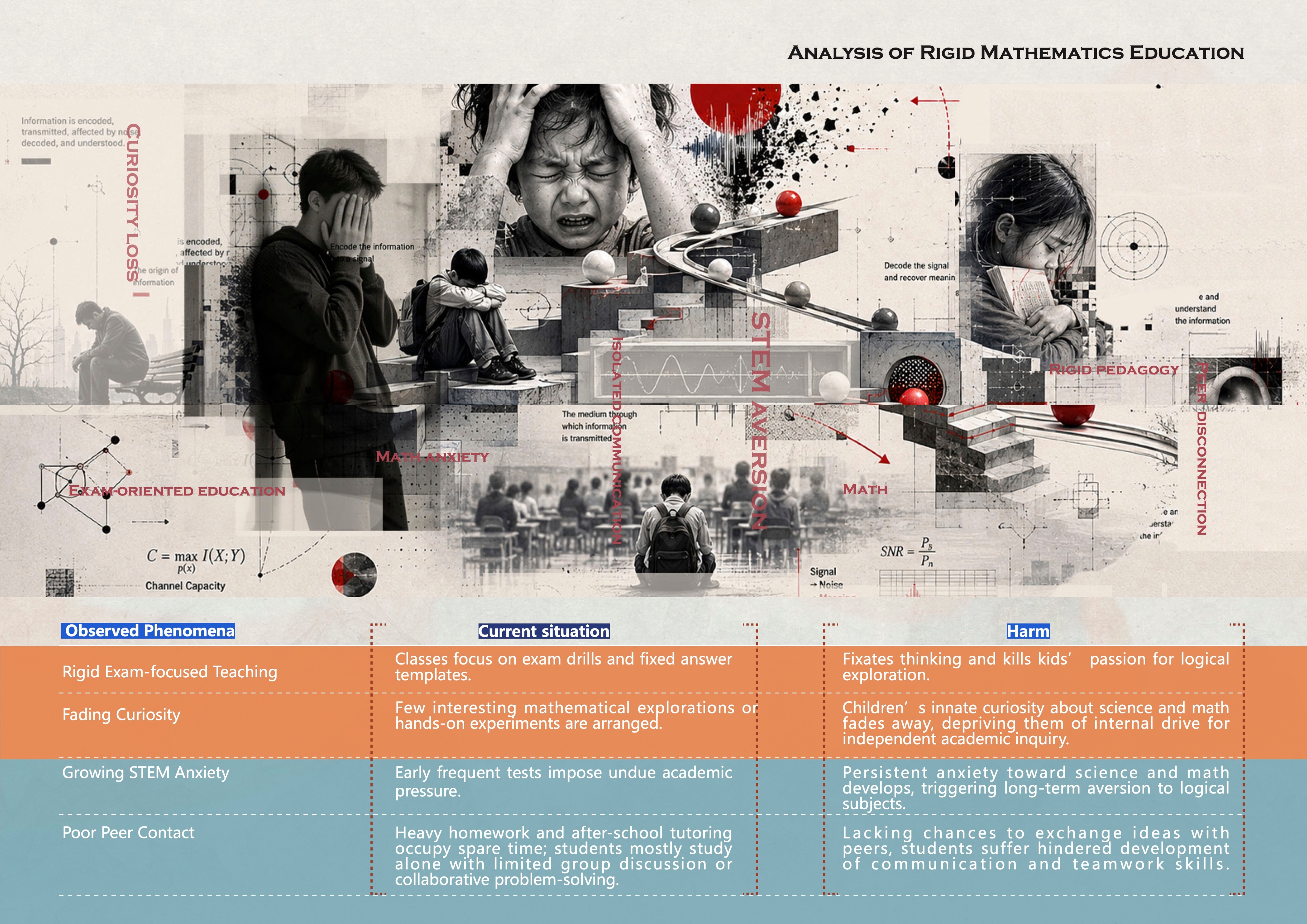
What problems have arisen from the traditional, rigid examination model?
It has become a primary force stifling teenagers' natural curiosity for logic and numbers. Heavy homework and relentless, repetitive drills not only fuel intense STEM anxiety and academic pressure among younger students, but also disrupt essential communication and collaborative problem-solving among peers. Consequently, math is reduced to an isolated, high-pressure zero-sum game. To counteract this, we must dismantle the implicit walls built by conventional schooling and standardized testing, redesigning a vibrant academic ecosystem defined by multi-school collaboration and cross-generational mentorship.
Target
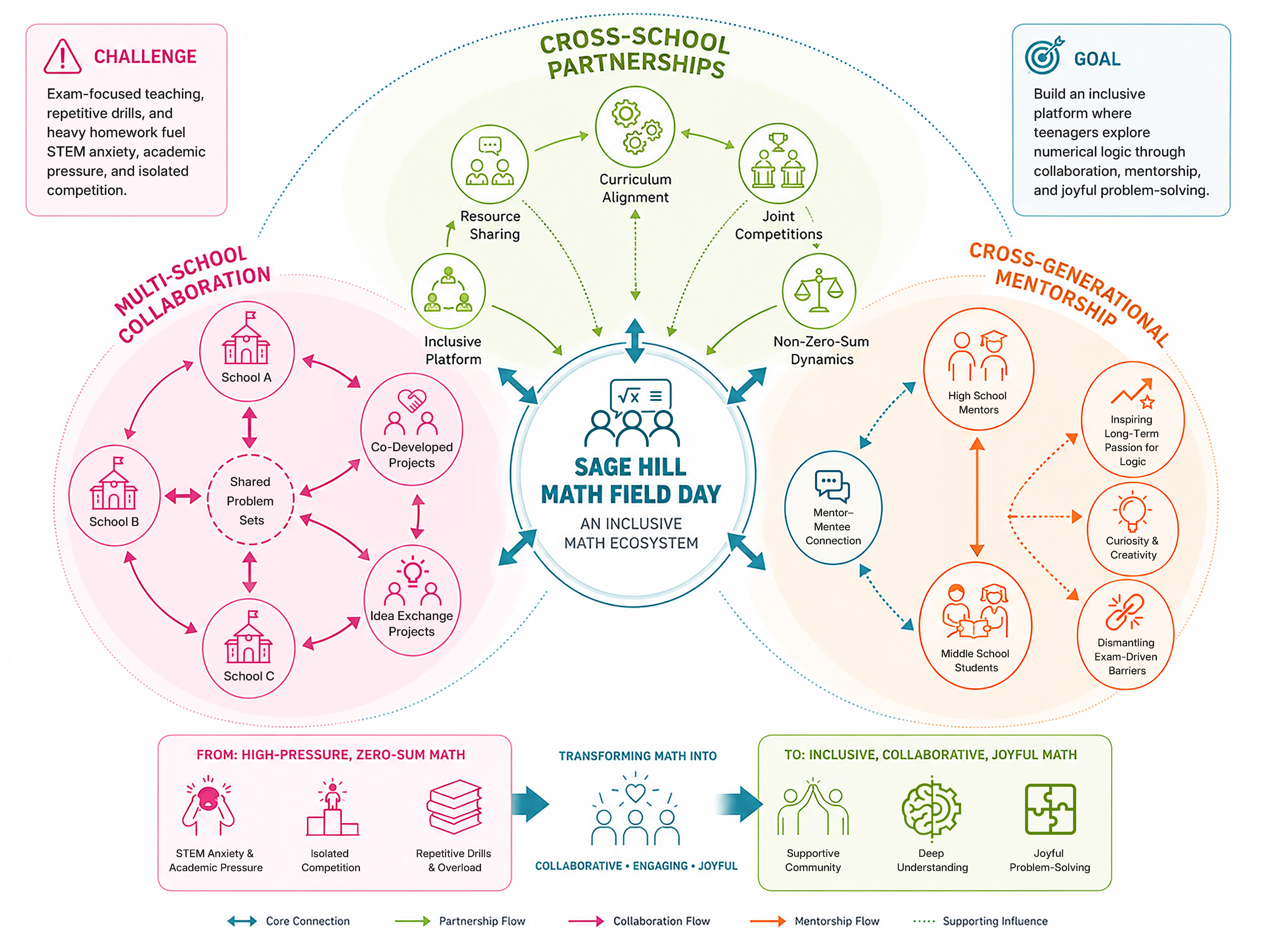
Targeting younger students burdened by STEM anxiety, this project designs an inclusive platform for teenagers eager to explore numerical logic. Our goal is to dismantle conventional exam-driven barriers by building a vibrant academic ecosystem. Through multi-school collaboration, non-zero-sum dynamics, and cross-generational mentorship, we aim to redefine math as a collaborative, engaging intellectual pursuit, inspiring long-term passion for logic.
ACTion
Engineered a micro-academic ecosystem driven by three core strategies
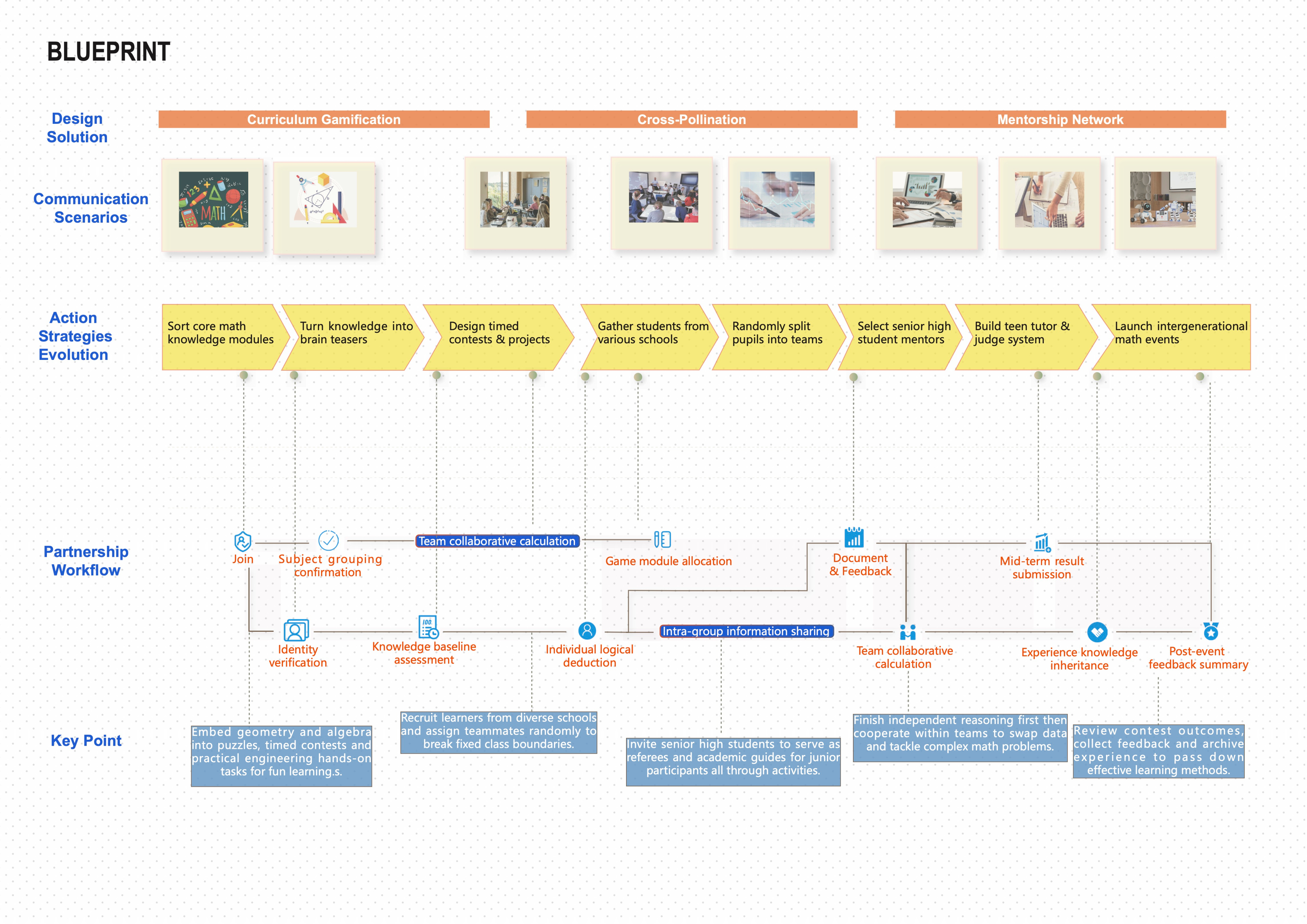
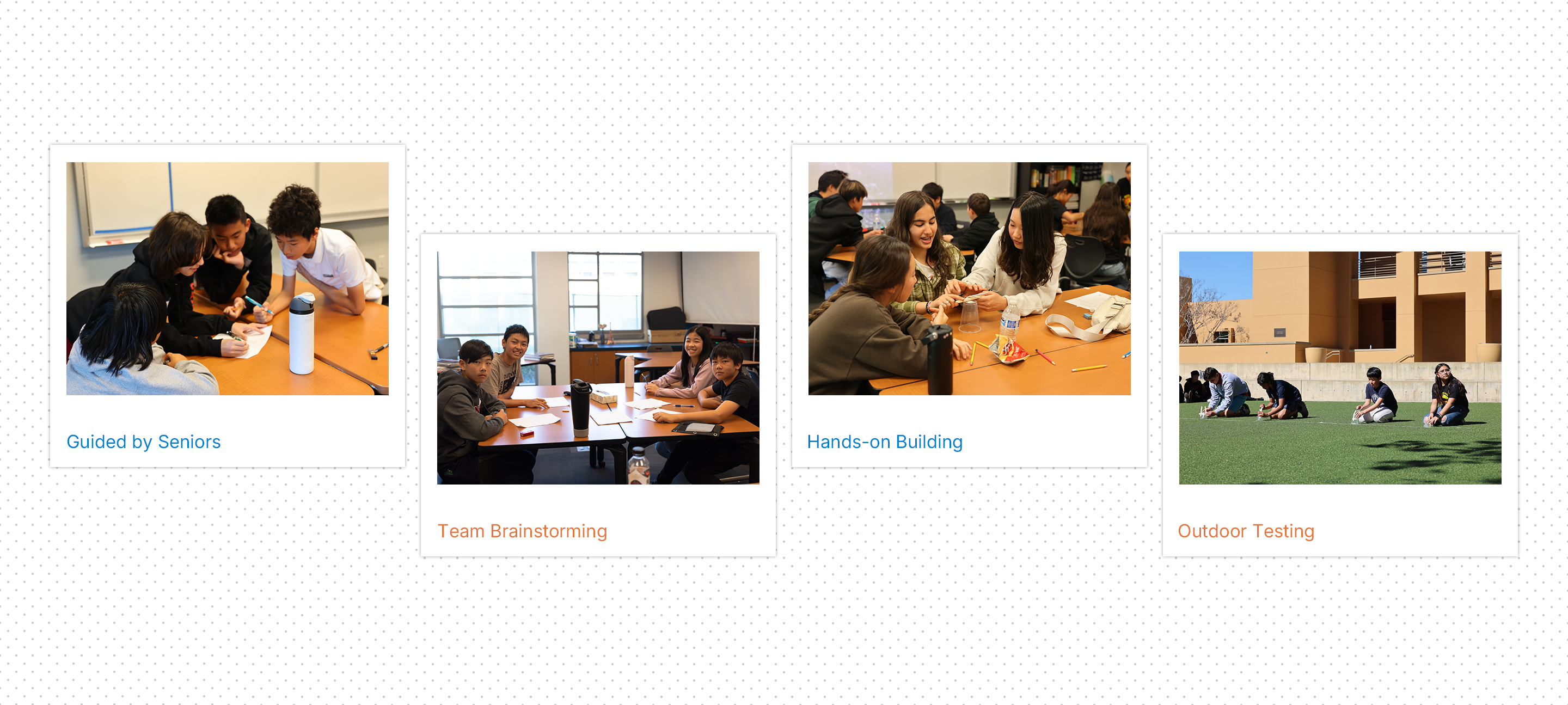
As student volunteers, we helped design and host an engaging six-hour math competition for students in grades 6–8. To dismantle the rigid, exam-driven paradigm, we built a vibrant micro-academic ecosystem driven by three core strategies:
Curriculum Gamification: We transformed geometry, algebra, discrete math, and number theory into interactive brain teasers, countdown contests, and hands-on engineering projects, allowing students to experience the creativity and beauty of mathematics.
Cross-Pollination: Breaking traditional institutional boundaries, we randomly shuffled and teamed up pupils from diverse schools, catalyzing instant communication ice-breaking and collaborative problem-solving.
Mentorship Network: High school student volunteers transcended the role of rigid judges; instead, they acted as academic mentors, passing down high-level competitive insights through post-event reviews and shared learning paths.
impact
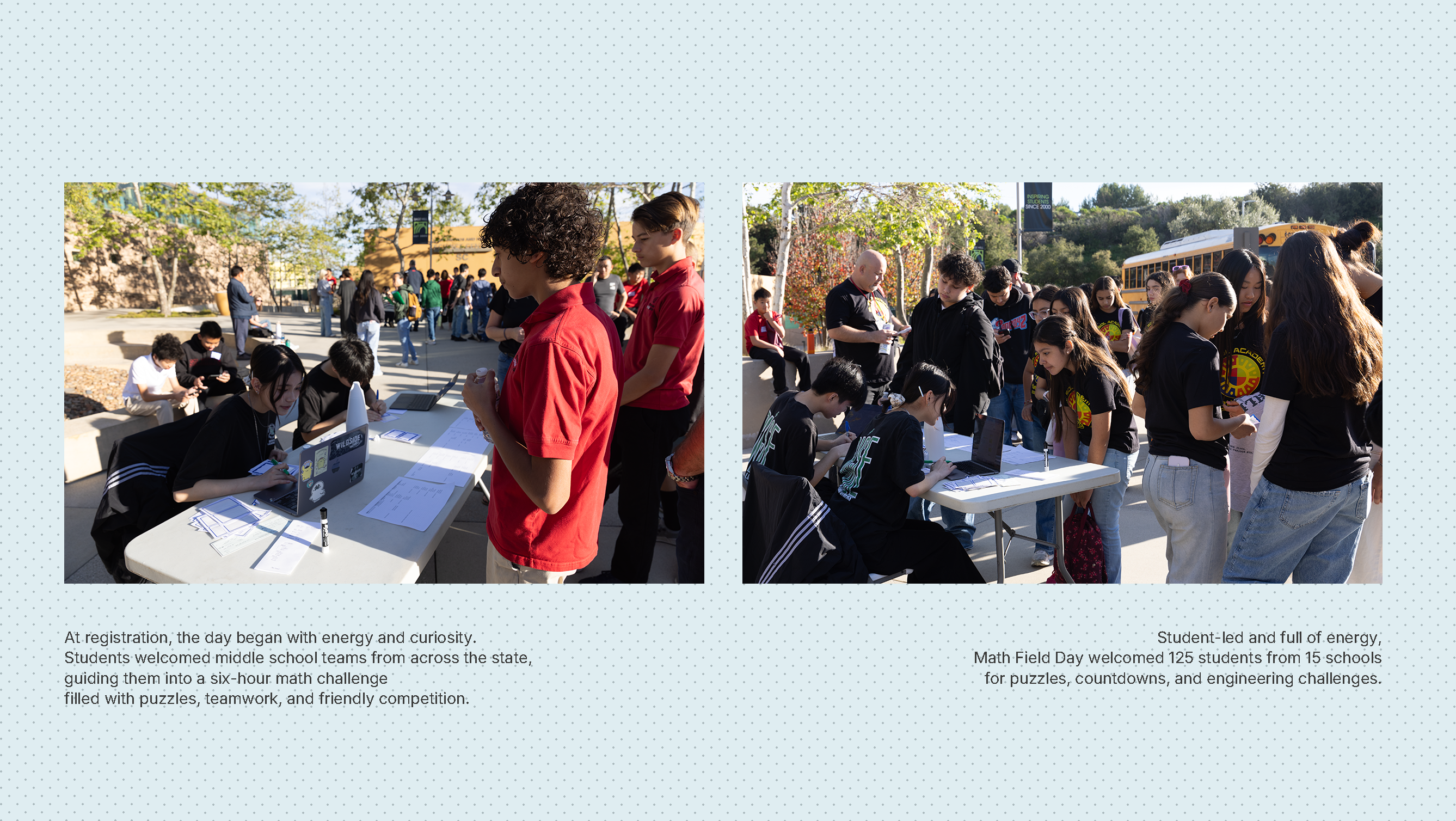
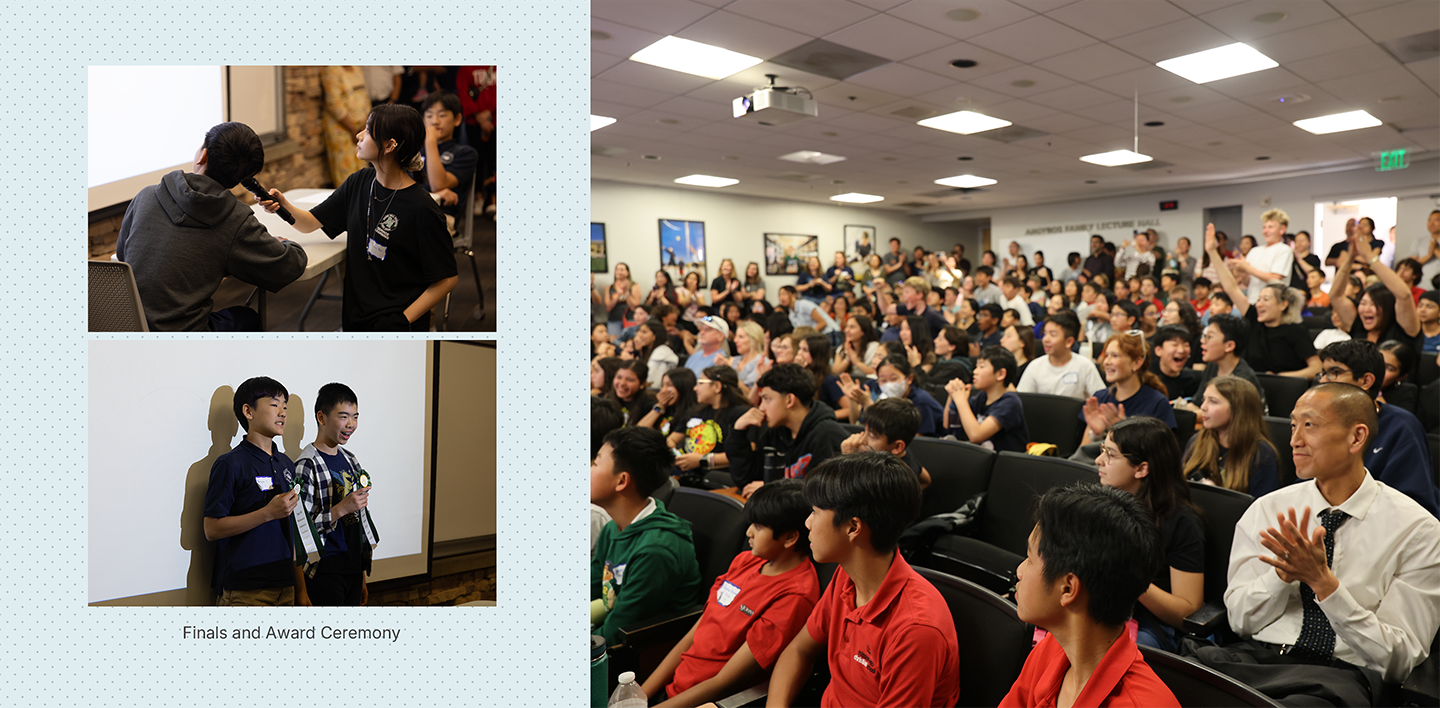
This student-led project successfully delivered an engaging six-hour math event, attracting 125 students in grades 6–8 from 15 schools across the state. Beyond these metrics, the true impact materialized post-event, as previously unacquainted students and teachers spontaneously exchanged contacts to share prep resources. Ultimately, we transcended a conventional, isolated exam, incubating a vibrant, interconnected regional academic community.

home
observation
target
Action
impact

back to top

Sage Hill Math Field Day
timeline
2025 – Present
role
Activity Designer
Volunteer
skills
Curriculum Gamification, Event Operations, Multi-School Coordination, Youth Mentorship
Observation
What problems have arisen from the traditional, rigid examination model?
It has become a primary force stifling teenagers' natural curiosity for logic and numbers. Heavy homework and relentless, repetitive drills not only fuel intense STEM anxiety and academic pressure among younger students, but also disrupt essential communication and collaborative problem-solving among peers. Consequently, math is reduced to an isolated, high-pressure zero-sum game. To counteract this, we must dismantle the implicit walls built by conventional schooling and standardized testing, redesigning a vibrant academic ecosystem defined by multi-school collaboration and cross-generational mentorship.
Target
Targeting younger students burdened by STEM anxiety, this project designs an inclusive platform for teenagers eager to explore numerical logic. Our goal is to dismantle conventional exam-driven barriers by building a vibrant academic ecosystem. Through multi-school collaboration, non-zero-sum dynamics, and cross-generational mentorship, we aim to redefine math as a collaborative, engaging intellectual pursuit, inspiring long-term passion for logic.
ACTion
Engineered a micro-academic ecosystem driven by three core strategies
As student volunteers, we helped design and host an engaging six-hour math competition for students in grades 6–8. To dismantle the rigid, exam-driven paradigm, we built a vibrant micro-academic ecosystem driven by three core strategies:
Curriculum Gamification: We transformed geometry, algebra, discrete math, and number theory into interactive brain teasers, countdown contests, and hands-on engineering projects, allowing students to experience the creativity and beauty of mathematics.
Cross-Pollination: Breaking traditional institutional boundaries, we randomly shuffled and teamed up pupils from diverse schools, catalyzing instant communication ice-breaking and collaborative problem-solving.
Mentorship Network: High school student volunteers transcended the role of rigid judges; instead, they acted as academic mentors, passing down high-level competitive insights through post-event reviews and shared learning paths.
impact
This student-led project successfully delivered an engaging six-hour math event, attracting 125 students in grades 6–8 from 15 schools across the state. Beyond these metrics, the true impact materialized post-event, as previously unacquainted students and teachers spontaneously exchanged contacts to share prep resources. Ultimately, we transcended a conventional, isolated exam, incubating a vibrant, interconnected regional academic community.

home
observation
target
Action
impact

back to top
Sage Hill Math Field Day
timeline
2025 – Present
role
Activity Designer
Volunteer
skills
Curriculum Gamification, Event Operations, Multi-School Coordination, Youth Mentorship
Observation
What problems have arisen from the traditional, rigid examination model?
It has become a primary force stifling teenagers' natural curiosity for logic and numbers. Heavy homework and relentless, repetitive drills not only fuel intense STEM anxiety and academic pressure among younger students, but also disrupt essential communication and collaborative problem-solving among peers. Consequently, math is reduced to an isolated, high-pressure zero-sum game. To counteract this, we must dismantle the implicit walls built by conventional schooling and standardized testing, redesigning a vibrant academic ecosystem defined by multi-school collaboration and cross-generational mentorship.
Target
Targeting younger students burdened by STEM anxiety, this project designs an inclusive platform for teenagers eager to explore numerical logic. Our goal is to dismantle conventional exam-driven barriers by building a vibrant academic ecosystem. Through multi-school collaboration, non-zero-sum dynamics, and cross-generational mentorship, we aim to redefine math as a collaborative, engaging intellectual pursuit, inspiring long-term passion for logic.
ACTion
Engineered a micro-academic ecosystem driven by three core strategies
As student volunteers, we helped design and host an engaging six-hour math competition for students in grades 6–8. To dismantle the rigid, exam-driven paradigm, we built a vibrant micro-academic ecosystem driven by three core strategies:
Curriculum Gamification: We transformed geometry, algebra, discrete math, and number theory into interactive brain teasers, countdown contests, and hands-on engineering projects, allowing students to experience the creativity and beauty of mathematics.
Cross-Pollination: Breaking traditional institutional boundaries, we randomly shuffled and teamed up pupils from diverse schools, catalyzing instant communication ice-breaking and collaborative problem-solving.
Mentorship Network: High school student volunteers transcended the role of rigid judges; instead, they acted as academic mentors, passing down high-level competitive insights through post-event reviews and shared learning paths.
impact
This student-led project successfully delivered an engaging six-hour math event, attracting 125 students in grades 6–8 from 15 schools across the state. Beyond these metrics, the true impact materialized post-event, as previously unacquainted students and teachers spontaneously exchanged contacts to share prep resources. Ultimately, we transcended a conventional, isolated exam, incubating a vibrant, interconnected regional academic community.